Leeds heads multi-centre trial of innovative treatment for childhood Duchenne muscular dystrophy

An image of Edward with the care team at the NIHR Leeds CRF Children's site.

The NIHR Clinical Research Facility is playing a key role in a trial exploring a new treatment for children with Duchenne muscular dystrophy, a rare and progressive muscle-wasting condition.

The GUARDIAN trial, which is being run through NIHR Clinical Research Facility at Leeds Children’s Hospital, is evaluating the long-term use of vamorolone in Duchenne muscular dystrophy (DMD).

DMD is a genetic condition that usually affects boys. It causes progressive muscle weakness, with restricted mobility and a shorter life expectancy.

The newly approved treatment, vamorolone aims to help children with DMD maintain muscle strength for longer, whilst reducing some of the most difficult side effects associated with existing medications.

Current recommendations for care include use of anti-inflammatory drugs that supress a patient’s immune system, called corticosteroids. They can delay disease progression but often lead to stunted growth, emotional and behavioural challenges, and other quality-of-life issues that can be difficult to manage at home and at school.

Vamorolone is an alternative corticosteroid recently approved by the National Institute for Health and Care Excellence (NICE). In short term studies, it appears to offer the same benefits as current treatments, slowing decline in motor function but with fewer side effects related to growth, mood, and behaviour.

Dr Anne-Marie Childs, Consultant Paediatric Neurologist and Chief Investigator for GUARDIAN, said: “Having been one of the UK sites to take part in the original clinical trial of vamorolone (the Vision DMD study) we are pleased to see that vamorolone will be available for use in NHS care from April 2025. However, as with all new drugs there are many ‘unknowns’ with vamorolone’s use in clinical practice.

It is, therefore, essential to gather further data on its longer-term effectiveness and side effects which is why the GUARDIAN study is so important for both the UK and the international DMD community. We are delighted to be at the forefront of this work, as chief investigating UK site and the first to recruit to the study.” 

David Taylor and Rachel Allen’s son, Edward, aged 9, is taking part in the study. Living in Northallerton, North Yorkshire, Edward uses a powered chair daily to get to school and go on trips with friends and family due to his limited mobility.

“Our experience of being on a clinical trial has been fantastic. Regular check-ups with a kind and friendly team are great and he is being cared for brilliantly. It is amazing to think that being on a clinical trial allows Edward to help others in the same position in the future.”

David and Rachel said: “By using the powered chair, Edward then has the energy to use play equipment such as swings and slides – something which he loves. Edward is a remarkable, wonderful boy. In daily life we try to ensure that Duchenne does not ‘rule the roost’.”

They added: “Our experience of being on a clinical trial has been fantastic. Regular check-ups with a kind and friendly team are great and he is being cared for brilliantly. It is amazing to think that being on a clinical trial allows Edward to help others in the same position in the future.”

“The staff at Leeds are amazing and they go out of their way to ensure you receive the best care possible. We are really fortunate to live near such a great centre for research!”

Charity partnership backs neuromuscular research powered by NIHR Leeds CRF, enabling life-changing trials for families

An image of Austin in a hospital bed with him mother Maxine and Dr Anne-Marie Childs sitting at the side of the bed.

Duchenne UK and Leeds Hospitals Charity have partnered to fund two new roles within the Neuromuscular Service over the next five years. Together, they are contributing more than £300,000 to support this specialist team, recognising its status as a centre of excellence in paediatric neuromuscular research.

As part of the service, NIHR Leeds Clinical Research Facility (CRF) Children’s Site delivers pioneering clinical trials, exploring innovative treatments for neuromuscular conditions at Leeds Children’s Hospital and has consistently led the way in this area of research.

The NIHR Leeds CRF has been the first site in the UK to recruit to several clinical studies for Duchenne muscular dystrophy (DMD), the most common and severe form of childhood muscular dystrophy. Most recently, the children’s research unit delivered a landmark Phase 1 trial investigating a promising new treatment for DMD.

11-year-old Austin was diagnosed with the condition in November 2015, at just two years old. Austin’s mother Maxine initially thought he had a virus and took him to hospital, where he spent the next month having tests.

Three years ago, Austin began a trial at the NIHR Clinical Research Facility Children’s Site. Austin has received over 130 infusions, and though he knows he will lose the ability to walk, he tells Maxine he takes part in the trials because, ‘I want to help boys in the future to walk longer.’

For Austin’s family, the opportunity to participate in clinical trials has been a lifeline, offering hope to other families to find better treatments and eventually a cure. Austin’s current trial ends in September, but Maxine says if he chooses to continue to take part in research trials, they will continue to visit hospitals up and down the country.

‘From the moment Austin was diagnosed, our world changed. Nothing could have prepared me for the grief of knowing his life would be cut short. But through the darkness, clinical trials gave us hope. The support from the team in Leeds has been incredible; they’ve become like family. Research is vital, not just for medical breakthroughs, but for families like ours to feel less alone. Austin is paving the way, and we’re so proud of him.’

The funding from Duchenne UK and Leeds Hospital Charity will go towards funding the role of Consultant Paediatric Neurologist Dr Anne-Marie Childs. Dr Childs said the funding would be enable the service to plan for the future.

‘We’re incredibly grateful to both Leeds Hospitals Charity and Duchenne UK for their grant funding to support the children’s neuromuscular service. This investment will allow us to attract the best people to work in the Leeds neuromuscular team and create new opportunities for clinical trials that can support even more families. Neuromuscular conditions have a devastating impact, not just on the child affected but the whole family; funding like this gives hope that new treatments and new drugs can be developed.’

Natasha Allergy Research Foundation visit to Leeds Children’s Hospital to meet Clinical Research Facility study participants  

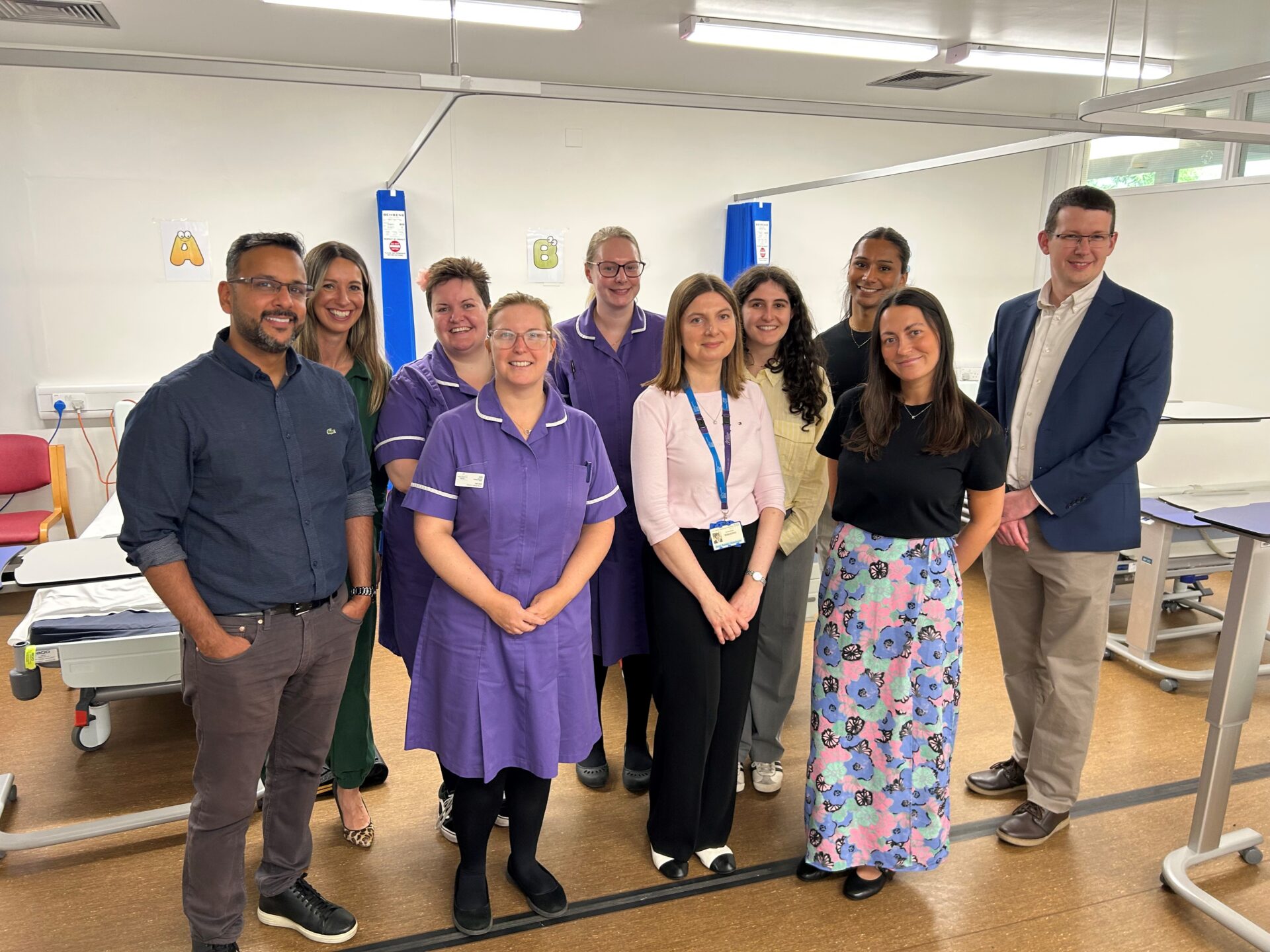
An image from the visit with clinicians and visitors in a ward setting.

On Monday 7 July, Leeds Children’s Hospital and the NIHR Clinical Research Facility (CRF) Children’s Site welcomed visitors from The Natasha Allergy Research Foundation (NARF). Visitors from Natasha’s Foundation and their partner organisations came to see first-hand how The Natasha Clinical Trial is helping allergy patients in Leeds.

Children as young as two are taking part in the £2.7 million Natasha Clinical Trial across nine NHS hospitals including Leeds Children’s Hospital, part of Leeds Teaching Hospitals NHS Trust. The trial aims to demonstrate the effectiveness of commonly available foods to treat peanut or cow’s milk allergies.

The Natasha Clinical Trial, which began in 2023, is a randomised controlled trial – the gold standard in medical research. Before starting the treatment, the children and young people undergo food challenges over two hospital visits to confirm their food allergy diagnosis and make sure they are suitable to have the Oral Immunotherapy Treatment (OIT).

Once enrolled, each patient is given a very small amount of a food to which they are allergic at a dose that is safe for them, which is taken according to a standardised protocol under medical supervision. This may be given either in a hospital clinic or at home with medical support.

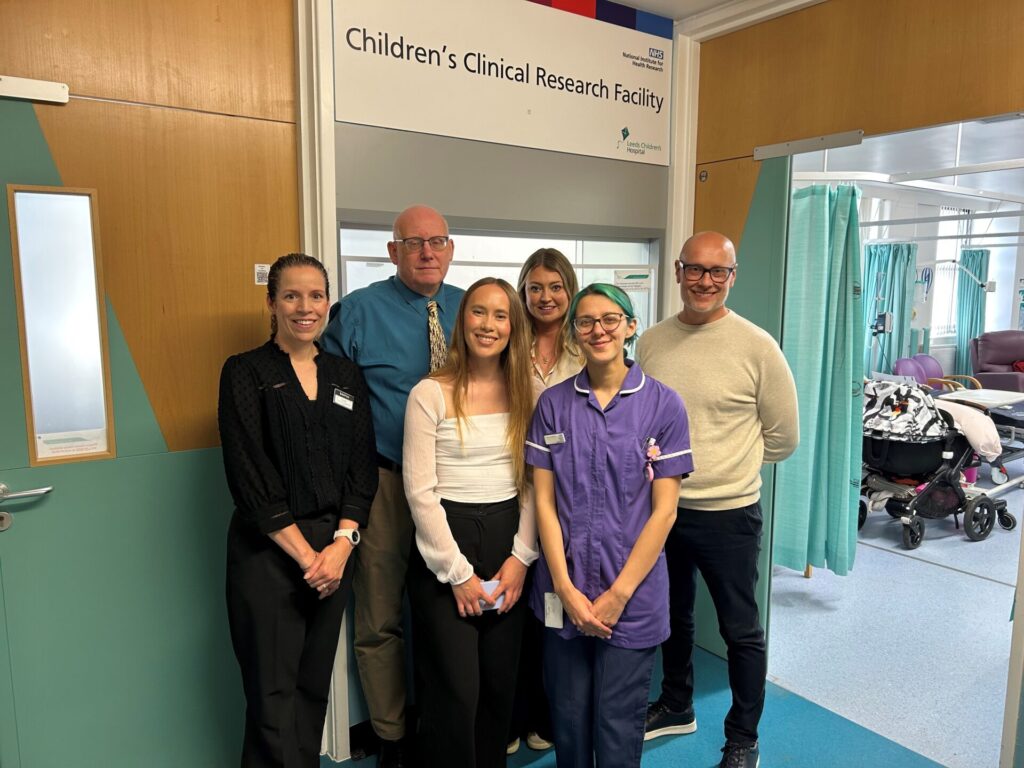
An image of the visitors under a sign for the Children's Clinical Research Facility.
The Natasha Allergy Research Foundation (NARF) and their partner organisations came to see first-hand how The Natasha Clinical Trial is helping allergy patients in Leeds.

If they tolerate the food, they then take a daily ‘dose’ of this real food at home, and the amount is gradually increased by the medical team every few weeks while being closely monitored for any adverse effects.

It is hoped that the OIT treatment will mean that patients who had previously suffered anaphylaxis on exposure to products such as peanuts, will now be able to tolerate eating a small amount of the allergen without having a dangerous reaction.  

The study aims to assess the effectiveness of OIT used to train the immune system of children and young people with food allergies to tolerate an allergen. The results and clinical experience gained from the trial will help shape future treatment options for food allergies in the NHS. Results from the trial are expected in 2027.

Visitors from Natasha’s Foundation were given a tour of Leeds Children’s Hospital facilities including the Children’s Allergy Day Unit where patients come for allergy treatments, and the NIHR Leeds Clinical Research Facility Children’s Site where patients come to take part in the study.

The Leeds Children’s Hospital trial is being led by Dr Aida Semic-Jusufagic who said:

‘We’re delighted to welcome visitors from The Natasha Allergy Research Foundation and their supporters today and show them first-hand how their funding is already benefiting our patients here in Leeds. By taking part in this trial, we’re helping to shape the future of the treatment of allergy in the NHS’.   

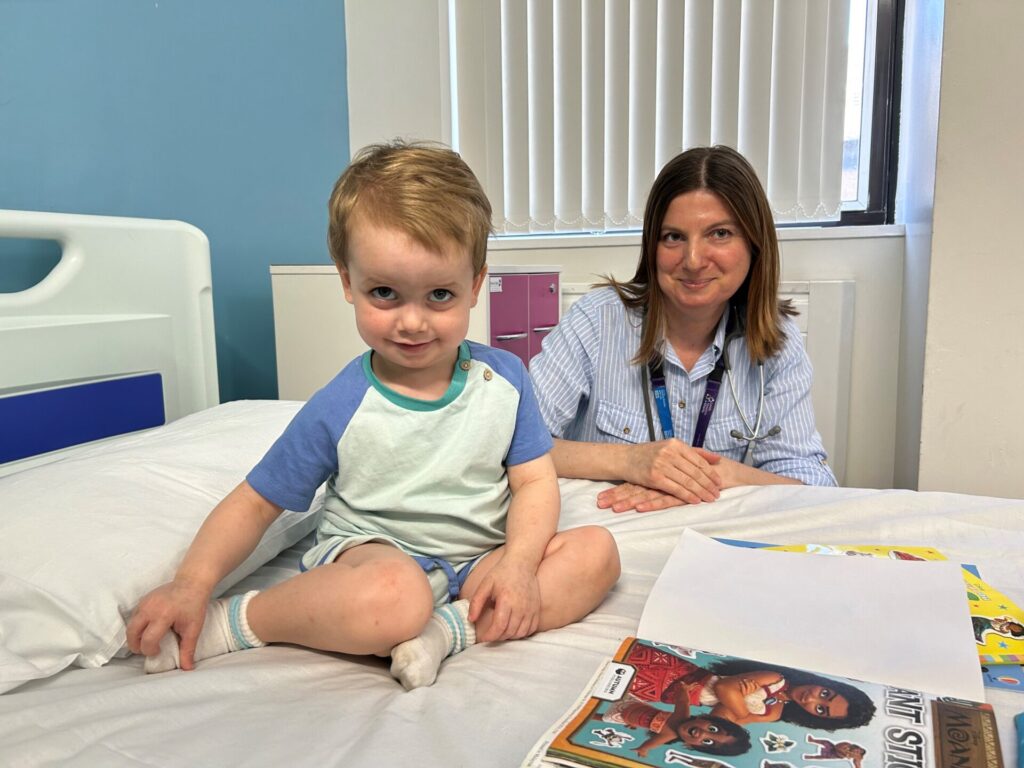
An image with a Eddie a young patient on the bed with Dr Aida Semic-Jusufagic, sitting at the bed side.
Dr Aida Semic-Jusufagic, lead for the trial, pictured with Eddie a young patient.

The Natasha Clinical Trial is the first major study to be funded by The Natasha Allergy Research Foundation, set up by the parents of Natasha Ednan-Laperouse, who died aged 15 from a severe food allergic reaction.

Visitors spoke to families of patients taking part in The Natasha Clinical Trial in the CRF including parents of 2 year old Iyla who has several food allergies including dairy, egg, nuts, beans and peas. Parents Rachel and Mitesh spoke about how the Iyla’s dietary restrictions affect so many things in her life from child-care and holidays to day-day decisions about where to eat and who to spend time with. Iyla’s parents are delighted she has been given the opportunity to take part in The Natasha Trial.

Visitors from Natasha’s Foundation were joined by representatives from corporate partners Booths, CH&CO, Elior, Greene King and Samworth Brothers.  

Rachel Hodson, Director of Corporate Partnerships and Fundraising at Natasha’s Foundation said:

‘It is great to see first-hand the amazing work going on at Leeds Children’s Hospital and meet some of the participants of The Natasha Clinical Trial and their families. For our partners it was a fantastic opportunity to see how their donations are making a real difference to the lives of people with food allergies.’