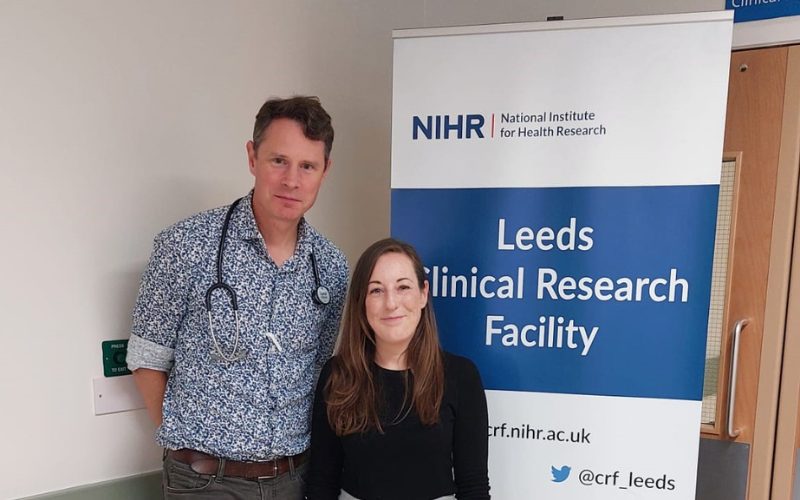
As a Public and Patient Involvement and Engagement (PPIE) Officer at NIHR Clinical Research Facility: Leeds and Leeds Teaching Hospitals NHS Trust, Nachammai Swaminathan is passionate about ensuring research reflects and includes the communities it aims to serve.
Working as part of the NIHR PPIE strategy across Leeds research including NIHR Clinical Research Facility: Leeds, Nachammai supports patient and public involvement in research, with a particular focus on underserved and underrepresented communities.
A key part of her role involves building trusted relationships with local organisations, charities, community leaders and partners to help make research more accessible, inclusive and community focused. Her work includes supporting community engagement, co-production activities, condition-specific PPIE groups and outreach initiatives designed to encourage wider participation in research.
Nachammai said: “Through community outreach and relationship-building, I have been able to support people from underserved and research-naïve communities to feel heard, valued and confident contributing to research discussions and activities”.
Through initiatives such as PPI Connect 2025, Hello Hearts sessions and targeted outreach activities, Nachammai has helped create sustainable opportunities for communities to become involved in research conversations and decision-making.
Her work has also supported researchers and colleagues to improve the accessibility and inclusivity of their studies. Feedback gathered through engagement and involvement activities has informed changes to patient-facing materials, communication approaches, study design and engagement strategies across several research areas including cancer, vaccines, antimicrobial resistance and prostate cancer research.
For Nachammai, one of the most rewarding aspects of the role is seeing individuals grow in confidence and become actively involved in shaping research.
“Seeing individuals progress from attending a community session for the first time to joining PPIE groups, contributing to research projects, co-presenting at conferences, or becoming part of steering groups has been especially rewarding,” she added.
Working within NIHR PPIE has further developed Nachammai’s skills and expertise in research engagement, co-production, partnership working and supporting meaningful public involvement. Through working closely with diverse communities, researchers and healthcare professionals, she has developed skills in community engagement, co-production, partnership working, public speaking and strategic PPIE delivery.
Nachammai said: “What makes me most proud about being involved with NIHR is the opportunity to help make research more inclusive and representative of the communities it aims to serve”.
Colleagues from the NIHR Clinical Research Facility (CRF): Leeds joined clinical research professionals from across the UK and Ireland at the UKCRF Conference in Dublin, sharing expertise, presenting research and leading discussions on the future of clinical trials.
NIHR Clinical Research Facility: Leeds was represented by12 colleagues from a wide range of specialities, including pharmacy, dental research and patient and public involvement and engagement (PPIE), reflecting the multidisciplinary expertise that underpins research delivery across its five sites at Leeds Teaching Hospitals NHS. Two colleagues led workshops to share best practice in efficient trial set ups and the team also showcased 12 posters, highlighting innovative work taking place at NIHR Clinical Research Facility: Leeds.
A key highlight of the conference was a keynote address from Dr Alex Churchill, Deputy Director for Clinical Trials Policy and Infrastructure Policy and International Partnerships at the Department of Health and Social Care, who outlined the Government’s ambition to make the UK a global leader in clinical research. His presentation focused on accelerating clinical trial set-up, expanding research into primary and community care settings, strengthening partnerships between the NHS, academia and industry, and creating a more research-active NHS workforce. He also highlighted the increasing role of artificial intelligence and connected data infrastructure in improving trial design, participant recruitment and research delivery.
These themes were reflected throughout the conference programme, with sessions exploring how to deliver the right research in the right setting, improve access and participation in research, harness digital and AI-enabled technologies, strengthen workforce capability, and build national and international collaborations that support faster, more inclusive clinical research. Delegates also heard examples of how streamlined processes and coordinated working across organisations are helping to reduce study set-up times and bring innovative treatments to patients more quickly.
The conference provided an excellent opportunity for the Leeds team to network, share best practice and bring back new ideas that will help further strengthen research delivery for patients across Leeds and the wider region.
Pacemakers are life-changing devices that help people with heart disease live longer and improve their quality of life. However, despite major advances in technology, many pacemakers are still left on standard factory settings rather than being tailored to the individual needs of patients. Researchers at the NIHR Clinical Research Facility (CRF) Leeds have been leading pioneering work to show how a more personalised approach to pacemaker care can improve patient outcomes, reduce hospital admissions and deliver better value for the NHS. Through a series of NIHR-supported studies, the team has helped change the way pacemaker patients are cared for locally, nationally and internationally.
Our Goal
More than 300,000 people in the UK live with a pacemaker, with around 36,000 new devices implanted every year. Researchers wanted to better understand whether personalising pacemaker settings and combining device expertise with heart failure care could improve patients’ health and quality of life. The team also recognised that symptoms such as breathlessness and tiredness in people with pacemakers are often wrongly attributed to ageing or existing heart disease, meaning heart failure can sometimes go undiagnosed and untreated.
Our Approach
Through a series of NIHR-supported clinical trials led from the NIHR Leeds CRF, researchers explored how personalised pacemaker programming and joined-up care could improve outcomes for people living with pacemakers.
The research showed that carefully adjusting pacemaker settings to suit each individual patient could:
Improve heart function
Reduce unnecessary pacing of the heart
Extend pacemaker battery life
Reduce the need for replacement surgery
Improve exercise capacity and quality of life
One major study involving 1,800 patients across West Yorkshire found that around one-third of people with pacemakers had previously undiagnosed heart failure.
In response, the team developed a new multidisciplinary Combined Heart Failure and Device Clinic at Leeds Teaching Hospitals NHS Trust, bringing together experts in pacemakers and heart failure treatment in one service.
The clinic is staffed by highly trained cardiac physiologists and nurses and now supports more than 300 patients each year.
Real World Impact
The work also helped develop a highly skilled and diverse research workforce, including NIHR-funded clinical researchers, cardiac physiologists and clinicians.
The research has already changed care for patients in Leeds and is influencing practice internationally.
The personalised approach developed through the NIHR Leeds CRF has now been embedded into routine NHS care at Leeds Teaching Hospitals NHS Trust through the Combined Heart Failure and Device Clinic.
Patients are receiving more tailored treatment, helping reduce hospital admissions and improving long-term outcomes.
The work has also contributed to international heart failure and pacemaker guidelines in Canada, America and Europe, helping shape care for people with pacemakers around the world.
Importantly, the research demonstrates how personalised care can improve outcomes while also reducing pressure on the NHS by preventing complications and avoiding unnecessary procedures.
What’s Next
Researchers at NIHR Leeds CRF continue to lead new studies exploring how personalised pacemaker programming can further improve care for people with heart disease.
Upcoming research includes:
Exploring new pacemaker lead positions and their effect on heart function
Developing simpler ways to personalise heart-rate settings
Expanding studies across multiple NHS centres
Investigating how personalised programming could benefit people with less severe heart failure
The team is also continuing work to increase awareness and education around personalised pacemaker care through international guideline groups, professional societies and training programmes.
This work would not have been possible without the support of NIHR infrastructure at the NIHR Leeds CRF, helping turn research into real improvements for patients, healthcare services and society.
The NIHR Leeds Clinical Research Facility (CRF) is set to support the development of community-based diagnostics and further develop translational research following a major new investment in research infrastructure awarded to Leeds Teaching Hospitals.
Leeds Teaching Hospitals has been awarded £1.5m from the National Institute for Health and Care Research (NIHR) to support the Trust’s ambition to further advance cutting-edge research and enable more patients across the region to benefit from life-changing research.
The funding has been awarded to support four initiatives which include pioneering equipment and essential digital infrastructure to allow the Trust to drive further collaboration between academic and industry partners, help streamline the delivery of innovative clinical trials, in line with the ambitions of the Life Sciences Sector Plan and develop more treatments for the future.
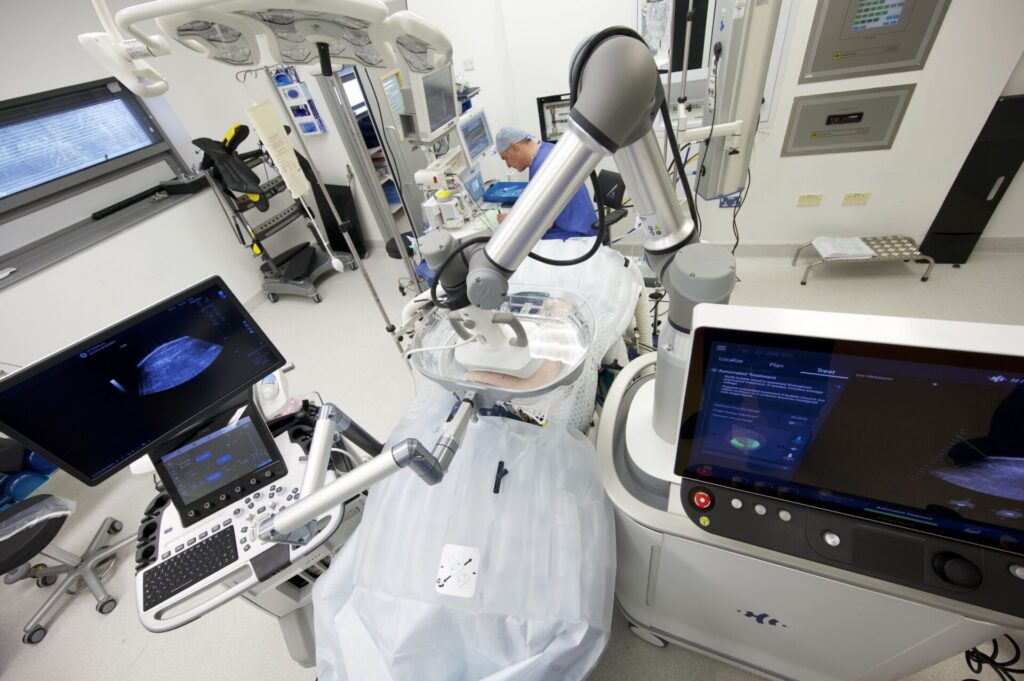
Funds will allow Leeds Teaching Hospitals to purchase a HistoSonics pioneering non-invasive platform, further expanding the Trust’s use of the Histosonic’s novel sonic beam therapy (histotripsy) to advance research into new cancer therapies.
Led by Professor Tze Min Wah, Professor of Interventional Radiology at Leeds Teaching Hospitals, this innovative technology was initially used by the Trust to conduct the liver tumour therapy in the Hope4Liver trial (2021) and subsequently world-first kidney tumour treatment using the technology in 2023 through the CAIN Trial. Data from the trial showed that it enabled day-case treatment leading to faster recovery, shorter hospital stays, and reduced complications, benefiting patients who participated in the trial and paving the way for future treatments.
Now, this latest investment means that the Trust, with support from the NIHR Biomedical Research Centre and NIHR HealthTech Research Centre in Accelerated Surgical Care, can expand its research and explore this technology for treating additional cancers and benefit more patients.
Investment will also deliver critical infrastructure to support a new simulated surgical operating suite at the Trust aimed at evaluating the environmental impacts of surgical innovations, driving connectivity between partners to accelerate new innovations and enable joint research between NHS and academia.
Funded by the Department of Health and Social Care, SUSTAIN, (Sustainability and Simulation Theatre for Academia and Industry) will be based at Leeds General Infirmary and is led by the NIHR HealthTech Research Centre in Accelerated Surgical Care offering an environment to test and implement new solutions into real-life settings. The additional NIHR investment will equip the facility with additional state-of-the-art equipment that will accelerate the development, evaluation and deployment of greener surgery technologies across the NHS.
The NIHR funding will also support translational research delivered by the NIHR Leeds Biomedical Research Centre and NIHR Leeds Clinical Research Facility by funding new equipment to evaluate a new AI enabled handheld cardiac ultrasound device to speed up heart failure diagnosis in GP practices, allowing more research to be delivered in out-of-hospital settings.
Finally, investment will cover the expansion of digital infrastructure within the Trust to develop and validate AI imaging algorithms that will improve the diagnostic accuracy and clinical decision making across major disease areas.
Dr Magnus Harrison, Chief Medical Officer at Leeds Teaching Hospitals Trust said: “This funding represents another step forward in how Leeds Teaching Hospitals, in collaboration with our NIHR infrastructure, is transforming research to reality. It means we can accelerate innovation, expand research capacity and enhance our technology so that patients benefit sooner from the latest breakthroughs.
“The Trust is a world-leading centre for excellence and these initiatives demonstrate how we’re already delivering against the NHS Ten Year Plan by ensuring our research and innovation enables more communities to benefit from life-changing research which supports prevention and accelerates the adoptions of digital and AI. Together with our partners across academia and industry, this additional investment will allow us to expand our research and create the right environment for world-class clinical studies so we support today’s challenges and transforming the healthcare of the future.”
This award is part of national funding which has seen the National Institute for Health and Care Research (NIHR) award £47.8 million to pay for equipment that will increase the ability of the NHS to deliver high-quality commercial research, as part of the Government’s aim to turbocharge clinical trials.
The award is funded by a partnership between the government and the pharmaceutical industry, called the Voluntary Branded Medicines Pricing, Access and Growth (VPAG) Investment Programme. The VPAG programme is designed to boost the global competitiveness of the UK life sciences sector and stimulate economic growth by accelerating commercial clinical trials, boosting NHS research capacity, and supporting sustainable, innovative medicine manufacturing.
Professor Lucy Chappell, Chief Scientific Adviser at the Department of Health and Social Care (DHSC) and Chief Executive Officer of the NIHR said: “This significant investment will provide the NHS with the high-quality equipment and facilities it needs to deliver cutting-edge commercial research that benefits the public.”
The NIHR Capital Investment Funding awards are designed to strengthen the UK’s capacity to conduct worldclass research that addresses the most pressing health and care challenges — from early detection and prevention to treatment, recovery, and digitally enabled care.
Leeds Teaching Hospitals will begin planning and procurement immediately, with new equipment and infrastructure expected to be in place from Summer 2026.