NIHR Leeds Clinical Research Facility showcases impact

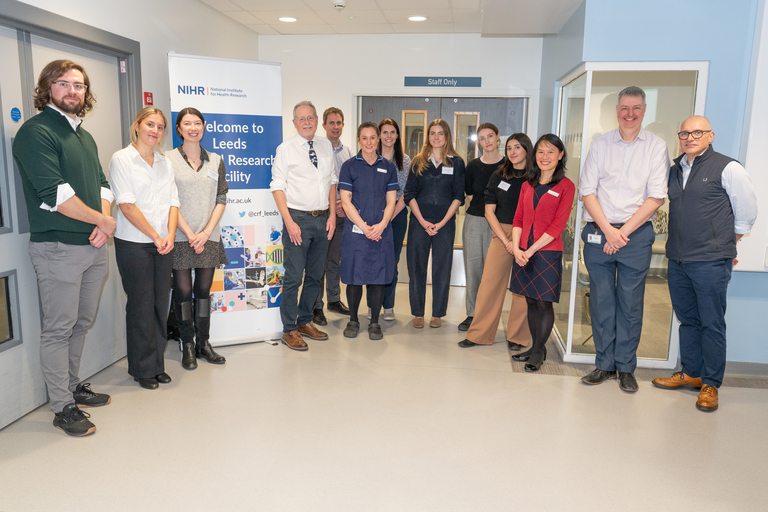
A photo of guests and delegates alongside members of the Trust's research team standing outside the NIHR Leeds Clinical Research Facility at St James, next to a banner for the facility.

NIHR Leeds Clinical Research Facility, together with city and regional leaders, recently welcomed HM Treasury to showcase how Leeds’ £40m NIHR infrastructure is accelerating national ambitions to tackle health inequalities and position the UK as a global leader in life sciences

The high-profile visit from the Treasury’s Growth and Resilience team began at the University of Leeds’ innovation hub, Nexus, with a roundtable highlighting how the city’s world-leading research and innovation are driving real-world impact.
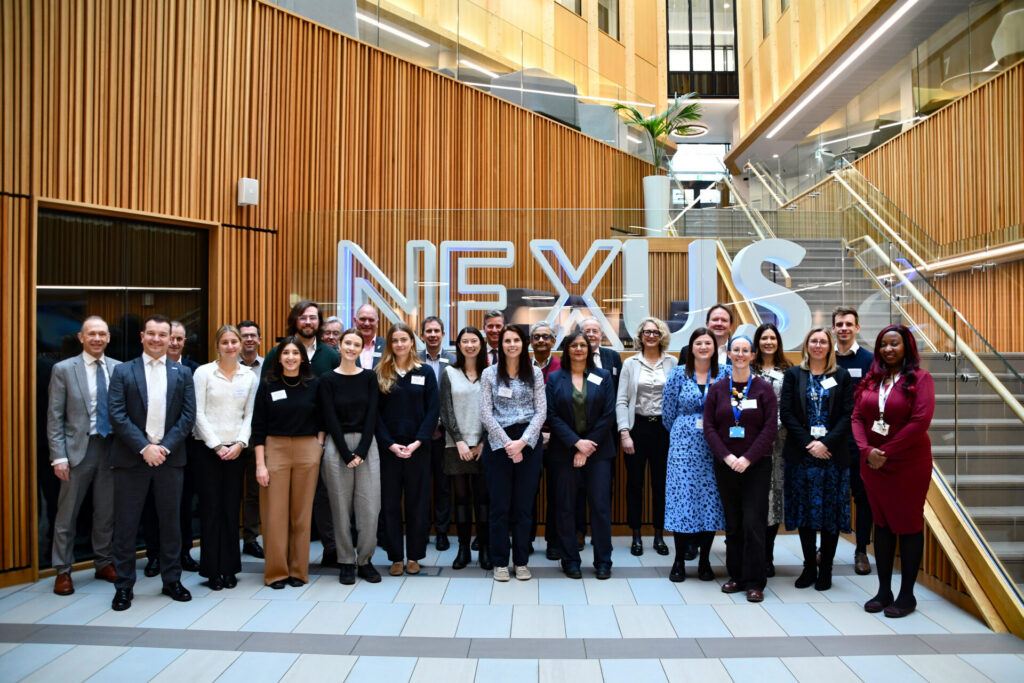
Director of the NIHR Leeds Biomedical Research Centre, Philip Conaghan, chaired the discussion, where a range of experts from academia and industry, including NIHR Leeds Clinical Research Facility outlined how Leeds is driving progress through its pioneering, partnership-powered NIHR@Leeds infrastructure.

NIHR Leeds Clinical Research Facility (CRF) had the opportunity to spotlight how it works with industry, research councils and charities to run more than 100 early-stage clinical trials each year, pioneering new treatments from the five NIHR Leeds Clinical Research Facility sites across Leeds Teaching Hospitals Trust.  It highlighted how clinical research has found that personalising how the pacemaker works improves patient outcomes and how it is at the forefront of novel cellular and virus cancer therapies which is helping to shape the future of cancer treatment.   
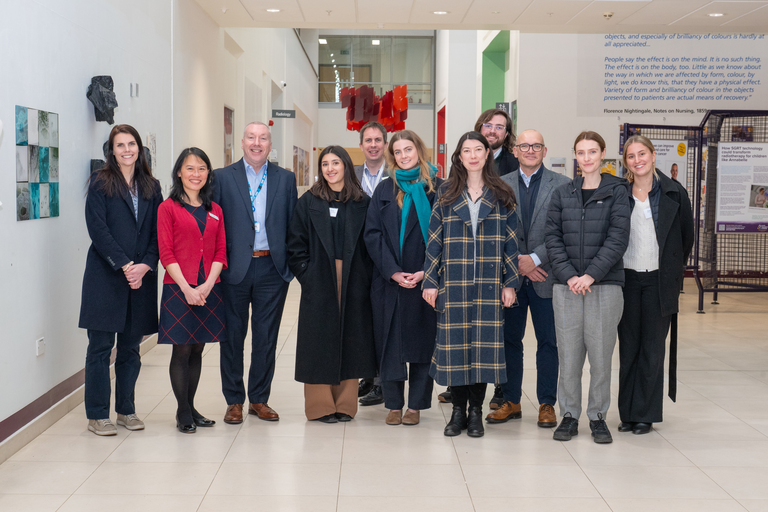
A photo of the visitors in the hospital atrium along with key members of the Trust's executive and senior team from Research & Innovation.

As part of the visit, Leeds and the region demonstrated how an outstanding track record transforming care repeatedly attracts national and international acclaim, and how it continues to raise the bar through unparalleled collaboration.

The event concluded with a visit to St James’s University Hospital, with a tour of the state-of-the-art NIHR Leeds Clinical Research Facility, just one of the five CRF sites at Leeds Teaching Hospitals. As part of this, delegates met with Executive and Senior Leaders to hear about the strength and scale of world-class clinical research at the Trust – one of the UK’s largest teaching hospitals, delivering impact and patient benefits across the region and beyond.   
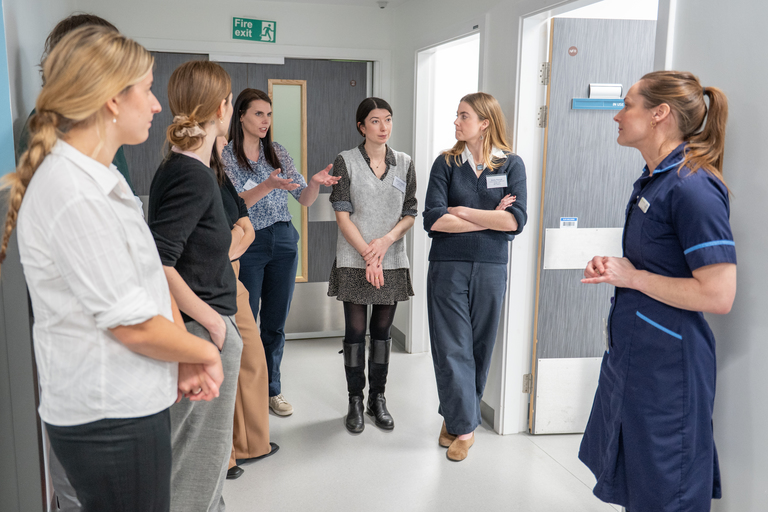
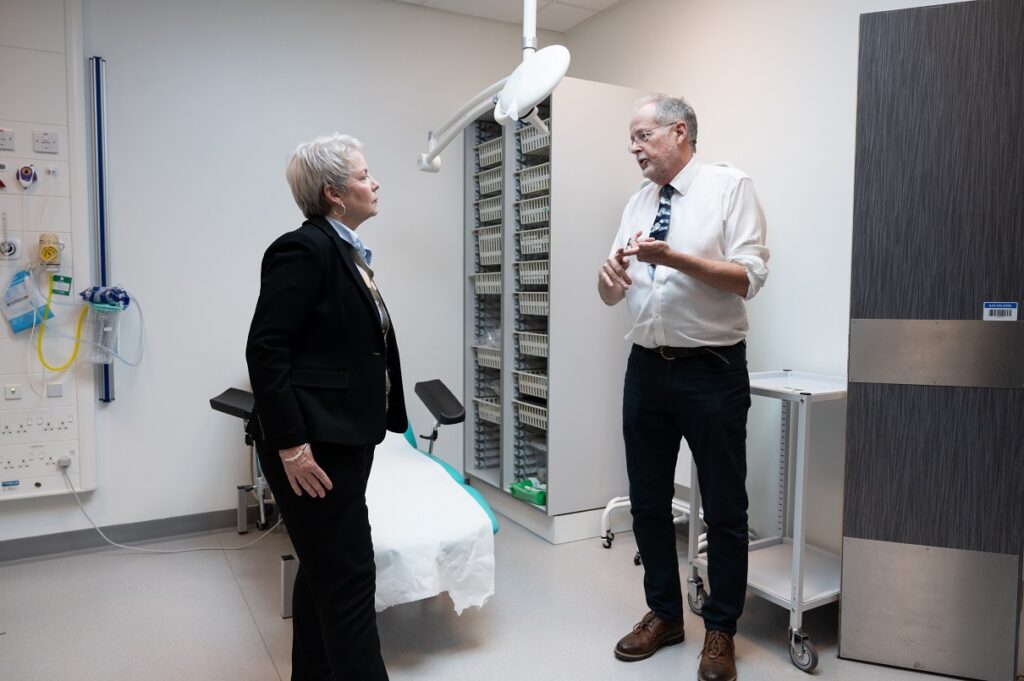
A photo of clinical team members showing the esteemed visitors around the NIHR Leeds Clinical Research Facility at St James Hospital.

Professor Chris Twelves, Director of NIHR Leeds Clinical Research Facility said:  “Together with our partners across NIHR, we were delighted to welcome HM Treasury’s Health and Growth Team to demonstrate the strength of collaborative partnership working and the pioneering work that is delivering impact to our patients, the future of healthcare as well as bringing wider economic value.

“We are proud of our strong track record in delivering pioneering clinical research and this was an ideal opportunity for our visitors to hear from our colleagues who are passionate about transforming the healthcare of the future and delivering impact.”

Read more about the wide-ranging visit via Health Innovation Leeds.

World-leading clinical research showcased as Minister pays visit to NIHR Leeds Clinical Research Facility

An image of key clinical staff and colleagues standing smiling in a line up photo with Karin Smyth MP stood in the centre outside the NIHR Leeds Clinical Research Facility St James site.

World-leading clinical research and pioneering cancer treatment taking place in Leeds has been showcased as part of the Government’s national cancer plan roll out.  We recently welcomed Karin Smyth, Minister of State for Health to St James’s University Hospital to see first-hand the cutting edge cancer trials and the innovative treatment which is being pioneered. 

An image of Professor Chris Twelves speaking with minister Karin Smyth MP in a clinical room.

The Minister had the opportunity to meet with Prof Chris Twelves, Professor of Clinical Cancer Pharmacology & Oncology and Clinical Director NIHR Leeds Clinical Research Facility alongside clinical research colleagues, senior clinicians and experts and partners of Leeds Teaching Hospitals who work collaboratively to deliver world-class cancer treatment to patients across Yorkshire.    

Ms Smyth heard about the diverse and expansive portfolio of clinical research, particularly rare cancers including anal cancer, myeloma and sarcoma, while visiting the state-of-the-art NIHR Leeds Clinical Research Facility based at the hospital.  It was the opportunity for us to share the world-leading, early-phase, experimental medicine studies taking place right here which aim to develop new treatments and healthcare therapies for the future.  

Prof Chris Twelves said: 

“We were delighted to welcome Minister Smyth to NIHR Leeds CRF recently.  It was an opportunity to demonstrate our impressive track record of delivering early phase experimental medicine trials and evaluating a range of new therapies and interventions.   Leeds St James’s CRF is just one of our five clinical research facilities co-located at Leeds Teaching Hospitals NHS Trust  and it was a privilege for our team and I to talk about how we support world-class research here.”

An image of minister Karin Smyth MP with a health care professional standing talking in a hospital corridor.

The Minister also spent time in Leeds Cancer Centre, one of the most comprehensive cancer centres in the UK and home to the largest single-site radiotherapy treatment service.  It was the opportunity to shine a light on the advances in treatment of anal cancer using precision radiotherapy, which has been pioneered following research by Prof David Sebag-Montefiore, Professor of Clinical Oncology at University of Leeds and funded by Cancer Research UK.     We were delighted to share the breadth and depth of clinical research we do right here in Leeds and demonstrate the impact we’re having on our patients today and the healthcare of tomorrow.

Advanced Therapies at the NIHR Leeds Clinical Research Facility (CRF)

A picture of Professor Chris Twelves.

The NIHR Leeds Clinical Research Facility is helping to shape the future of healthcare. In this blog post, Prof Chris Twelves, Clinical Director at the CRF, outlines what advanced therapies are, why they matter, and how the CRF is supporting their safe and effective development for patients.

What are Advanced Therapies?

Advanced therapies or Advanced Therapies Medicinal Products (ATMPs) are umbrella terms describing treatments that work at the level of cells, tissues, or genetic material. These therapies can offer long-lasting benefits and in some cases, the potential for cure. They are already showing important benefits in people with blood cancers, but are now reaching into other areas.

“Advanced therapies represent some of the most innovative areas of modern medicine. They aim to repair, replace, or restore biological function in ways that were previously impossible. At the CRF we are supporting the development and delivery of these cutting-edge approaches to improve patient outcomes.”

Advanced therapies include:

  • Cell therapies: using living cells to prevent, treat, or cure disease
  • Gene therapies: introducing or modifying genes to address underlying causes of illness
  • Tissue-engineered therapies: using engineered tissues to repair or replace damaged structures
  • Combined or next-generation approaches: including engineered immune cells, cancer-targeting viruses, and virus-based vaccine platforms

These approaches are increasingly used to treat cancers, inherited diseases, immune disorders and other hard-to-treat conditions.

Advanced Therapy research

The CRF supports early-phase clinical trials involving advanced therapies and ATMPs. Working with colleagues, our specialist teams provide the facilities, governance and expertise to support safe delivery of complex studies.

We support ATMP trials including those involving CAR-T cell therapies and oncolytic viruses.

Extending the impact and reach of CAR-T cell therapies

In haematology, Dr Frances Seymour is leading clinical trials of CAR-T cells in multiple myeloma and Dr Jonathan Carmichael is working closely with Professor Francesco Del Galdo and the rheumatology team investigating novel immunotherapies in treating autoimmune diseases. This work is further strengthened by Hannah Newman, Lead Nurse for the St James’s University Hospital CRF, who brings extensive experience in haematology clinical trials.

Leading centre for oncolytic virus research

Over many years Leeds has played a major role in advancing oncolytic virus therapy. In trials we have given oncolytic viruses directly into tumours or intravenously, in patients with a range of different cancers and the virus given either alone or in combination with other ant-cancer treatments. Working with Prof Adel Samson, clinical and scientific partners, and commercial sponsors the CRF has supported studies that have helped shape the field.

“Key achievements include demonstrating that oncolytic viruses can be delivered intravenously, showing benefits when combined with immunotherapies and supporting studies that have produced durable tumour responses in melanoma and liver cancer.”

Our commitment

“Advanced therapies offer new hope for people with conditions that are difficult to treat. At the NIHR Leeds CRF, we are committed to accelerating the safe development of these life-changing innovations.”

Collaboration at PPI Community Connect 2025 sets direction for more representative research

A group photo of the PPIE team with the hosts for the event at the Hamara Centre, in front of a stylish neon sign that reads 'HAMARA'.

Our recent Patient Public Involvement (PPI) event was held recently at the Hamara Healthy Living Centre. The PPI Community Connect 2025 event brought together over 86 community members, along with researchers. The event was designed to explore how research can be more meaningful, representative, and inclusive, providing opportunities to share experiences, learn about ongoing studies, and discuss ways to strengthen engagement across diverse communities.

Hosted by the NIHR Leeds Clinical Research Faculty (CRF) and Leeds Teaching Hospitals (LTHT) Research & Innovation department and taking place at the Hamara Healthy Living Centre in Leeds, the event brought together participants who shared experiences and ideas on improving public involvement in research.

The audience heard presentations from researchers outlining current projects, alongside personal stories from patients describing what taking part in research has meant to them.

Guests were welcomed by Dr Helen Radford, Lead for Strategic Leadership at NIHR UK CRF Network and Associate Director of Operations for LTHT Research, and Hanif Ismael, Lead for Patient Public Involvement at NIHR Leeds CRF.

An image of two volunteers with a staff member demonstrating the ECHO cardiac ultrasound machine on a volunteer in the background.

The event showcased a range of ongoing research in Leeds, covering prostate cancer, knee replacement, early detection of lung cancer, and heart health. Alongside these presentations, attendees also had the opportunity to take part in hands-on activities, including an ECHO heart scan demonstration (pictured above), which helped people better understand how research links to real clinical practice.

Contributors, Graham Holland and Imtiaz Chaudary, reflected on their own involvement in research and highlighted the importance of inclusive research.

Attendees also took part in group discussions that explored ways to strengthen engagement, widen participation among under-represented communities, and shape future research priorities.

The conversations touched on topics such as including more community-based sessions, improved multilingual materials, better use of digital and media channels, engaging people at cultural events and public spaces, providing appropriate language support, involving healthcare teams, and offering suitable incentives. and generated suggestions that will inform future initiatives.

Feedback from participants indicated that the event provided a valuable opportunity to ask questions, share experiences, and think about how research and communities can work better together.

One attendee described the day as “Well run, well attended, interactive and informative”, while another said it “was useful and made me willing to engage in research and share the opportunities.”

The organisers plan to use insights from PPI Community Connect 2025 to guide ongoing work on improving patient and public involvement.

For more information, please contact [email protected].

Research experience helps Leeds Young Owls Take flight into medicine

An image showing people conducting desk research.

Two members of our young research group, the Leeds Young Research Owls have been successfully accepted into universities to study medicine and train to be doctors.

The Leeds Young Research Owls (LYRO) group, funded by NIHR Clinical Research Facility, aims to inspire the next generation of researchers by providing young people with opportunities to learn about the medical research process through the Trust’s extensive research portfolio.

This provides a way to reach younger people and inspire them to become involved and engage with medical science and clinical research, preparing the next generation of researchers.

An image of LYRO alumni, Henry, who has been accepted to medical school. The images is a selfie of Henry standing outside on a track by a field at sunset.
Henry credits his experience with LYRO in getting into medical school

Owls alumni Oliver Barrie and Henry Neligan have both gained places at medical school, a remarkable achievement that reflects their dedication and the valuable experience gained through the group.

Henry (pictured), who is now studying at Newcastle University said: “The Owls and the medical research we took part in was a piece of my inspiration to become a doctor.  I am just so grateful for all the help the Owls has given me!”

Oliver, who is attending Hull York Medical School, added: “I included some of my experiences with LYRO on my personal statement and I also discussed the brilliant insight it gave me into medicine as a whole, and medical research at my interviews. Without the meetings with the Owls, I wouldn’t have had the unique experiences to talk about throughout my application process.”

LYRO now has a proven track record of helping foster the clinicians of the future, with five previous members successfully accepted to medical school to train as doctors.

With a growing legacy of success, LYRO continues to empower young people to pursue careers in medicine and research, fostering the skills and experiences that help shape the future of healthcare. We are incredibly proud of Oliver, Henry, and all our alumni who are making a difference in the medical field.

NIHR Leeds CRF supports new study into Penicillin allergy testing to fight antibiotic resistance  

An image of a person holding white tablets in their left hand

A trial supported by NIHR Leeds CRF into removing incorrect penicillin allergy labels on GP records could combat antibiotic resistance and save lives, an NIHR-funded clinical trial led by the University of Leeds has found. 

Penicillins are first-choice antibiotics for many common infections, but more than one in 15 UK adults have a penicillin allergy label on their medical records. In the event of an infection, they will be prescribed alternative antibiotics which can be less effective or have more side effects. This can result in several prescriptions being issued to control the infection, which affects wellbeing and contributes to antimicrobial resistance.  

The study published in the Lancet Primary Care, which was supported by NIHR Leeds Clinical Research Facility in Leeds, found that that almost nine in ten (88%) patients with a penicillin allergy label were not truly allergic after testing, and had their allergy label safely removed. More than 800 patients were included in the trial. 

Verifying the accuracy of penicillin allergy labels could help patients to access more effective antibiotics, which is crucial as the threat of antimicrobial resistance to public health grows. The ALABAMA (ALlergy AntiBiotics And Microbial resistAnce) trial, coordinated by the University of Oxford Primary Care Clinical Trials Unit, was created to help find solutions for this issue.  

An image of Dr Jonathan Sandoe
Dr Jonathan Sandoe was joint lead author on the ALABAMA study

Joint lead author Dr Jonathan Sandoe, Associate Clinical Professor in Microbiology in the University of Leeds School of Medicine and Leeds Teaching Hospitals NHS Trust, said: “Antibiotics have been life-saving drugs since the late 1930s, but we are now in an era where microbes are evolving to resist the effects of current antibiotics. The global challenge of antibiotic resistance is causing people to die of common infections – so it is vital to find ways to improve how antibiotics are used. Assessing people with penicillin allergy labels is one way we can achieve this.” 

Read the full story via the University of Leeds website 

Charity partnership backs neuromuscular research powered by NIHR Leeds CRF, enabling life-changing trials for families

An image of Austin in a hospital bed with him mother Maxine and Dr Anne-Marie Childs sitting at the side of the bed.

Duchenne UK and Leeds Hospitals Charity have partnered to fund two new roles within the Neuromuscular Service over the next five years. Together, they are contributing more than £300,000 to support this specialist team, recognising its status as a centre of excellence in paediatric neuromuscular research.

As part of the service, NIHR Leeds Clinical Research Facility (CRF) Children’s Site delivers pioneering clinical trials, exploring innovative treatments for neuromuscular conditions at Leeds Children’s Hospital and has consistently led the way in this area of research.

The NIHR Leeds CRF has been the first site in the UK to recruit to several clinical studies for Duchenne muscular dystrophy (DMD), the most common and severe form of childhood muscular dystrophy. Most recently, the children’s research unit delivered a landmark Phase 1 trial investigating a promising new treatment for DMD.

11-year-old Austin was diagnosed with the condition in November 2015, at just two years old. Austin’s mother Maxine initially thought he had a virus and took him to hospital, where he spent the next month having tests.

Three years ago, Austin began a trial at the NIHR Clinical Research Facility Children’s Site. Austin has received over 130 infusions, and though he knows he will lose the ability to walk, he tells Maxine he takes part in the trials because, ‘I want to help boys in the future to walk longer.’

For Austin’s family, the opportunity to participate in clinical trials has been a lifeline, offering hope to other families to find better treatments and eventually a cure. Austin’s current trial ends in September, but Maxine says if he chooses to continue to take part in research trials, they will continue to visit hospitals up and down the country.

‘From the moment Austin was diagnosed, our world changed. Nothing could have prepared me for the grief of knowing his life would be cut short. But through the darkness, clinical trials gave us hope. The support from the team in Leeds has been incredible; they’ve become like family. Research is vital, not just for medical breakthroughs, but for families like ours to feel less alone. Austin is paving the way, and we’re so proud of him.’

The funding from Duchenne UK and Leeds Hospital Charity will go towards funding the role of Consultant Paediatric Neurologist Dr Anne-Marie Childs. Dr Childs said the funding would be enable the service to plan for the future.

‘We’re incredibly grateful to both Leeds Hospitals Charity and Duchenne UK for their grant funding to support the children’s neuromuscular service. This investment will allow us to attract the best people to work in the Leeds neuromuscular team and create new opportunities for clinical trials that can support even more families. Neuromuscular conditions have a devastating impact, not just on the child affected but the whole family; funding like this gives hope that new treatments and new drugs can be developed.’

NIHR Leeds CRF at 20th UKCRF Network Conference

The NIHR Leeds CRF team standing on the steps at the conference.

NIHR Leeds CRF recently attended the 20th annual UKCRF Network Conference in Birmingham, the first to be held jointly with the NIHR Biomedical Research Centres.

Twenty-three of our team members, representing the broad scope of our work in clinical research, joined hundreds of delegates from across the UK to exchange insights and learn about the latest developments in healthcare research. It was an opportunity to create new connections and emphasised the importance of collaboration in delivering world-class research which is truly impactful.

Dr Helen Radford and Karl Ward delivered an outstanding session at the conference on the ever-growing role of artificial intelligence in advancing research. Dr Radford also shared valuable reflections into attracting commercial clinical research, and Karl Ward presented our approach for best practice in training and embedding research within NHS teams.

We were also privileged to hear from our patient and public involvement and engagement (PPIE) Manager Hanif Ismail and patient representative Barrow Sawo, who spoke compellingly about overcoming challenges in public engagement, highlighting inclusive strategies for meaningful collaboration.

The team had a great experience celebrating their successes at the conference, where they not only presented their research to peers but also had the opportunity to meet and exchange ideas with other leaders in clinical research delivery. Our thanks to the organisers, we are already looking forward to next year’s conference!