The NIHR Clinical Research Facility Leeds were proud to take part in the International Clinical Trials Day celebration at the NIHR Biomedical Research Centre (BRC) Leeds, joining colleagues, patients, and partners for a day dedicated to recognising the impact of health research.
As part of the programme, the team delivered a presentation highlighting the work of the Clinical Research Facility and the significant advancements made over the past 20 years. The session offered an overview of how the facility supports the delivery of early-phase and experimental medicine studies, helping to translate innovative research into real improvements in patient care.
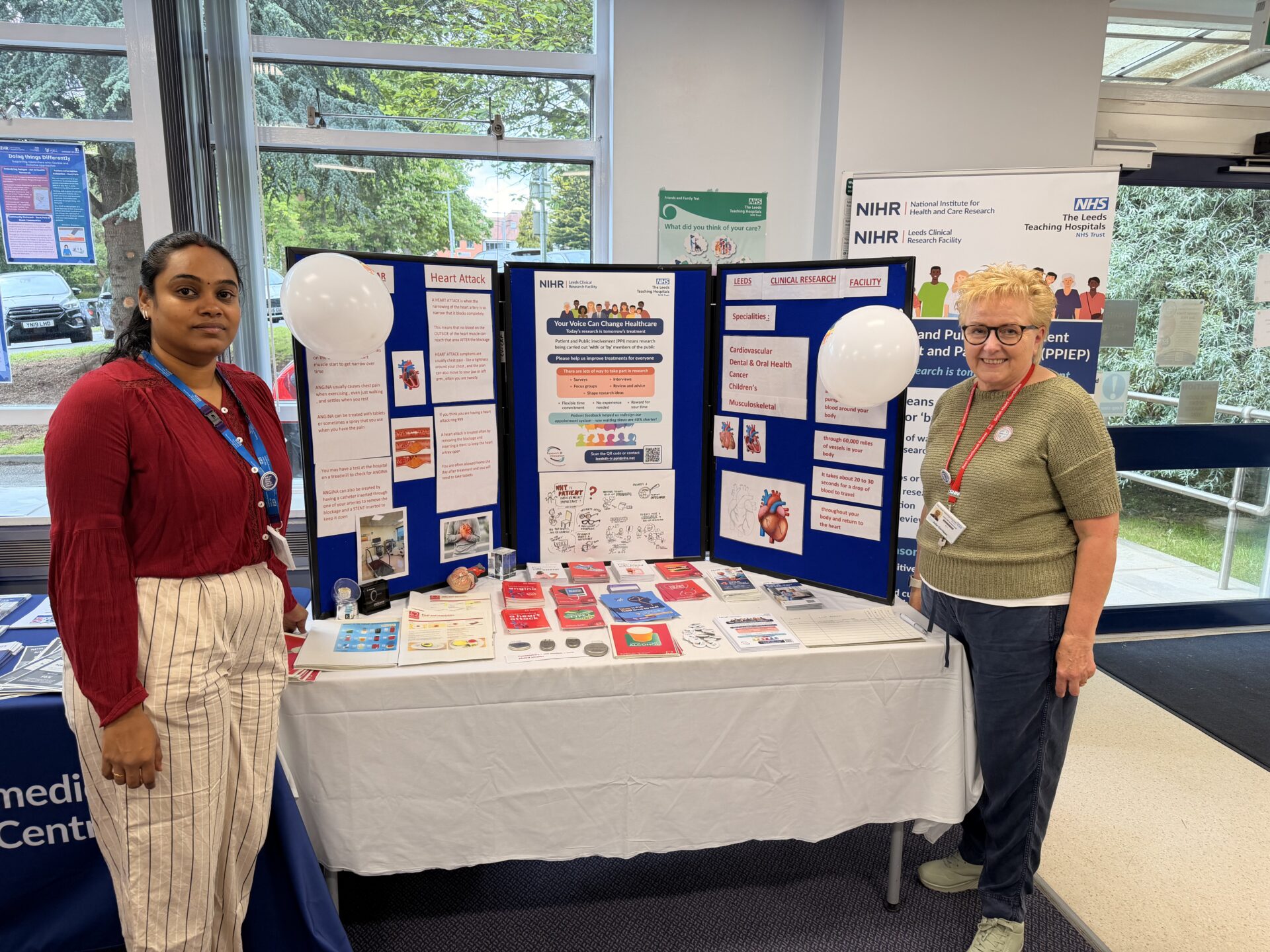
Alongside this, the team hosted a Patient and Public Involvement, Engagement and Participation (PPIEP) stand, creating an open and welcoming space for patients, staff, and visitors to learn more about clinical research. Attendees had the opportunity to speak directly with the team, ask questions, and explore how they can get involved in shaping and participating in research.
Through both the presentation and interactive stand, the Clinical Research Facility reinforced its commitment to advancing research through collaboration, innovation, and meaningful patient involvement.
Our recent Patient Public Involvement (PPI) event was held recently at the Hamara Healthy Living Centre. The PPI Community Connect 2025 event brought together over 86 community members, along with researchers. The event was designed to explore how research can be more meaningful, representative, and inclusive, providing opportunities to share experiences, learn about ongoing studies, and discuss ways to strengthen engagement across diverse communities.
Hosted by the NIHR Leeds Clinical Research Faculty (CRF) and Leeds Teaching Hospitals (LTHT) Research & Innovation department and taking place at theHamara Healthy Living Centre in Leeds, the event brought together participants who shared experiences and ideas on improving public involvement in research.
The audience heard presentations from researchers outlining current projects, alongside personal stories from patients describing what taking part in research has meant to them.
Guests were welcomed by Dr Helen Radford, Lead for Strategic Leadership at NIHR UK CRF Network and Associate Director of Operations for LTHT Research, and Hanif Ismael, Lead for Patient Public Involvement at NIHR Leeds CRF.
The event showcased a range of ongoing research in Leeds, covering prostate cancer, knee replacement, early detection of lung cancer, and heart health. Alongside these presentations, attendees also had the opportunity to take part in hands-on activities, including an ECHO heart scan demonstration (pictured above), which helped people better understand how research links to real clinical practice.
Contributors, Graham Holland and Imtiaz Chaudary, reflected on their own involvement in research and highlighted the importance of inclusive research.
Attendees also took part in group discussions that explored ways to strengthen engagement, widen participation among under-represented communities, and shape future research priorities.
The conversations touched on topics such as including more community-based sessions, improved multilingual materials, better use of digital and media channels, engaging people at cultural events and public spaces, providing appropriate language support, involving healthcare teams, and offering suitable incentives. and generated suggestions that will inform future initiatives.
Feedback from participants indicated that the event provided a valuable opportunity to ask questions, share experiences, and think about how research and communities can work better together.
One attendee described the day as “Well run, well attended, interactive and informative”, while another said it “was useful and made me willing to engage in research and share the opportunities.”
The organisers plan to use insights from PPI Community Connect 2025 to guide ongoing work on improving patient and public involvement.
Ian Johnson has become the first person in the world to join a new part of a brain cancer trial testing a drug designed to boost the effects of radiotherapy.
Ian, aged 50, is taking part in a study testing a new drug called AZD1390, which is being used alongside radiotherapy to treat glioblastoma—a type of brain cancer. The drug is designed to make radiotherapy more effective by stopping cancer cells from repairing themselves after treatment.
Glioblastoma is an aggressive type of brain tumour. The usual treatment involves surgery to remove as much of the tumour as possible, followed by radiotherapy and chemotherapy. However, the cancer often returns. The trial is looking for ways to improve treatment for people who have glioblastoma and cancer spread to the brain from elsewhere in the body.
This newly opened part of the trial is led by Professor Susan Short, a Consultant Clinical Oncologist at Leeds Teaching Hospitals.
Ian, a Senior Crown Prosecutor and father of two, was diagnosed with glioblastoma in December 2023 after experiencing symptoms that led to a scan. He said: “The diagnosis was a huge shock; I’d always been healthy and had no medical issues before this.”
He had surgery to remove the tumour in January, followed by radiotherapy and chemotherapy. Unfortunately, a scan showed the tumour had returned. Because his body didn’t respond well to chemotherapy, Ian’s doctor referred him to Leeds to explore other treatment options. That’s when he learned about this trial using AZD1390.
Ian added: “I felt hopeful when I heard about the study. “It gave me another option, and as someone with a degree in biology, I also wanted to help future patients by being part of research.”
Since starting the treatment, Ian says he’s been able to continue doing the things he loves, like walking, birdwatching, and spending time with his family: “Apart from feeling more tired than usual, I haven’t had any major side effects. The team here has been incredible—supportive, kind, and always there to answer questions.
“I would absolutely encourage anyone who’s given the chance to consider a clinical trial. Every new treatment has to be tested, and I feel proud to be helping in that process. It’s given me hope—not just for myself, but for others in the future.” The trial is being carried out at the NIHR Leeds Clinical Research Facility, a dedicated space for testing new treatments safely and carefully with the support of expert staff. Patients also benefit from the state-of-the-art Bexley Wing at St James’s Hospital, which includes a hotel on the top floor for those travelling long distances.
Professor Susan Short, Clinical Oncologist and Neuro Oncologist at Leeds Teaching Hospitals and the University of Leeds said: “We are really pleased to be offering patients access to promising new treatments like AZD1390 here in Leeds. This part of the trial is an important step in improving care for people with brain cancer.”
The Hello Hearts Community Outreach Programme is dedicated to fostering inclusivity and increasing participation within local communities in Leeds. Through this initiative, the team is working to engage underserved groups, ensuring that vital research is accessible and widely understood.
To showcase this important work, the team has created anew video highlighting how Hello Hearts is making a difference. Watch now to learn more about the programme and hear from participants in the Leeds community.
Through reaching out and utilising initiatives like this we are aiming to make our research activities more engaging and reflective of the population of Leeds, offering interactive educational sessions, health checks and promoting different way to get involved with research.